

Murtaza Ali ( Counter Terrorism and counter intelligence Analyst )
White-collar terrorism has emerged as the most dangerous evolution of militancy in Kashmir after 2019. It is not the gun-carrying militant on the street anymore; it is the white collared professional behind a desk, the educated voice with access, the respected individual whose polished presence masks a deadly agenda. This shift represents the most refined version of insurgency—militancy without weapons, uniforms, or visible networks, yet far more damaging than the traditional manpower-based militancy of the past.
This transformation is not accidental. It is a carefully designed, deeply calculated, long-term strategy of the ISI to sustain terrorism in the Valley through encrypted, deniable, and professionally-managed channels. When the conventional proxies collapsed after the abrogation of Article 370, the entire landscape of militancy was forced into a corner. Instead of allowing the ecosystem to die, ISI re-engineered it. The old Hurriyat-centric separatism, street agitation modules, and public militancy models were replaced by a quiet, discreet, elite-powered insurgency that hides in plain sight.
The new militant is no longer the stereotypical boy with a rifle. The new militant can be a government official, a doctor, an engineer, a businessman, a university academic, a lawyer, a political worker, or a student studying abroad. These individuals carry no visible markers of militancy, no slogans, no overt affiliations. Their talent, education, influence and “clean image” itself becomes their cover. They move funds, shape narratives, manipulate emotions, leak sensitive information, and guide ground operatives—all while appearing to be integrated, respectable members of society. Their danger lies precisely in their invisibility.
White-collar terrorism sustains itself through two core engines: funding and radicalization. The funding networks run through hawala, NGO’s, crypto channels, business fronts, real-estate routes, and overseas contribution chains. Each transaction is layered and disguised, camouflaged behind legitimate-looking operations that allow money to slip into the Valley with minimal risk. On the radicalization side, the primary targets are the youth—especially those in universities, colleges, schools, darul ulooms and madrassas. Emotional manipulation, curated propaganda, selective grievance-building, and ideological romanticism are used to create a mental battlefield long before any physical action takes place.
The ISI’s focus on the Kashmiri elite class is not new, but the post-2019 phase represents its most advanced version. The outreach now includes Kashmiri students and professionals in Bangladesh and Turkey, where discreet meetings, ideological grooming, and operational alignment are carried out under academic or business covers. The earlier pattern seen with Kashmiri students who went to Pakistan for studies around 2017–2018 and ended up joining militancy there has simply been replicated with new geographies and new facilitators.
The recent Al-Falah University case, where a doctor-led nexus was exposed, clearly reflects the sophistication of this model. The involvement of educated minds, academic credentials, and professional networks did not weaken the organization—it strengthened it. It allowed operations to run quietly, smartly, and without attracting conventional suspicion. Similar patterns are visible in other cases across India, where seemingly legitimate institutions received foreign funds that were later traced to activities linked with radicalization or militant facilitation.
In Kashmir itself, the spread of white-collar terrorism became more visible through cases like the SMC Secretary linked to the Kashmirfight online intimidation ecosystem, as well as the arrests of politicians and advocates by national agencies for terror-related involvement. These incidents confirm that the web of this new terrorism spreads exactly where it is least expected—inside administrative systems, political circles, professional spaces, digital platforms, and elite social networks.
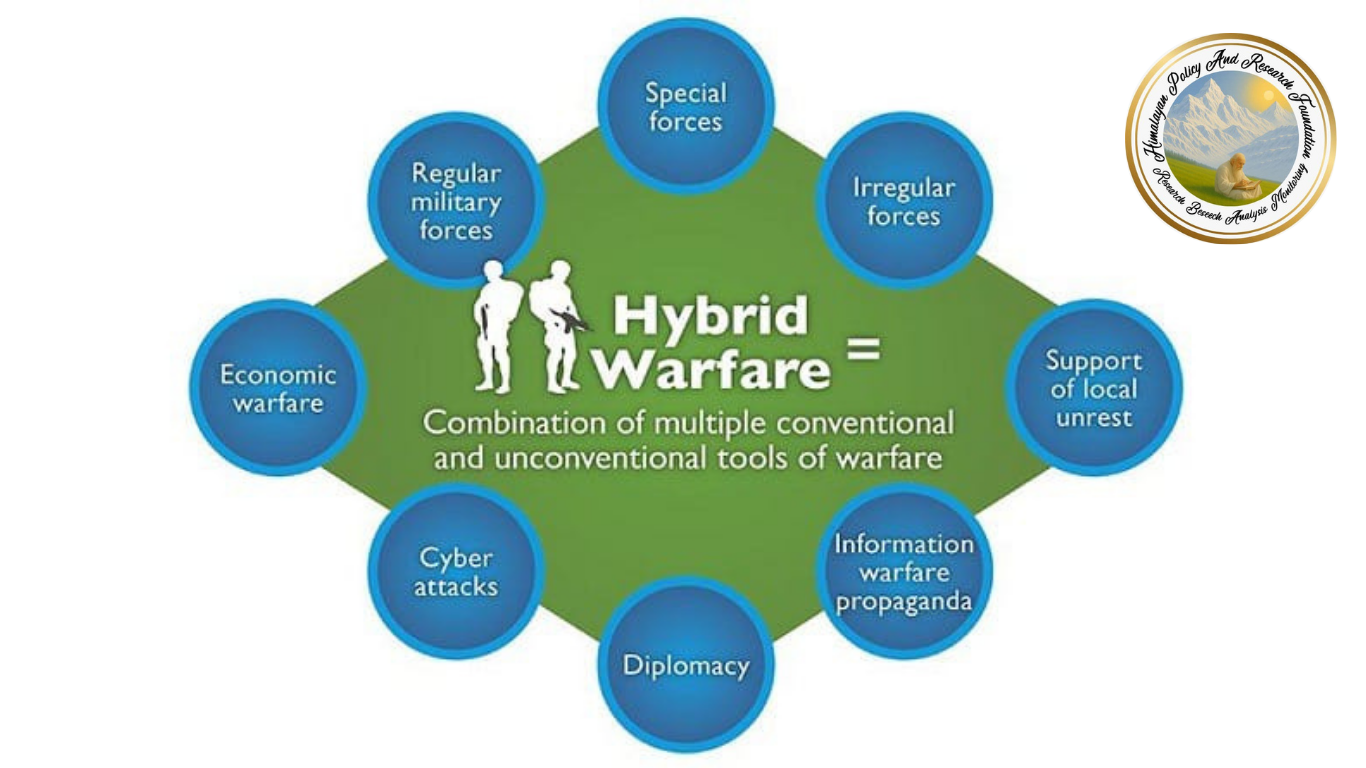
White-collar terrorists perform the most crucial tasks within the militancy grid: securing funds, running propaganda, generating radical content, managing covert communication channels, sharing sensitive data, arranging logistics, coordinating recruitment, and enabling procurement chains for arms and explosives. They are the core of the hybrid model—operationally silent but strategically decisive. Their strength lies in being ordinary. Their power lies in their respectability. Their threat lies in their ability to walk past security radars without leaving a trace.
After Article 370, the proxy outfits operating in J&K suffered massive setbacks. Support structures weakened, recruitment dried up, and ground networks shrank. It is in this vacuum that ISI’s “desk-level militancy” became the new operating doctrine. Instead of openly sending fighters, the focus shifted to sending ideas, funds, handlers, radical content, encrypted instructions, and long-game strategies. The battlefront moved from forests to phones, from streets to servers, from hideouts to universities.
The most aggressive radicalization today originates from campuses and ideological institutions, where extremist elements cultivate a Jihadi narrative, instill emotional victimhood, and massage psychological vulnerabilities. The vulnerable clusters—especially students studying abroad—become fresh reservoirs for ISI to access, compromise, recruit, and use as discreet carriers of funds, propaganda, or logistics. The diaspora angle, including long-standing propaganda networks operating from the UK under figures like Dr. Muzzammil Ayoub Thakur, continues to channel narratives that feed into ISI’s broader ecosystem.
White-collar terrorism represents the most dangerous phase of militancy in Kashmir’s history. It is not loud, not visible, not disruptive in the traditional sense—but it corrodes silently from within. It turns professionals into operatives, campuses into recruitment grounds, businesses into funding channels, and legitimate institutions into covert nodes of destabilization. It is the insurgency of the educated, the insurgency of access, the insurgency of invisibility.
This is the militancy of the future—clean, quiet, encrypted, elite-driven and far harder to detect than any armed insurgency that came before it.
(The views expressed are solely those of the author and do not necessarily reflect the views of the Foundation.)